What do people come in for?
- Ongoing stress that doesn't switch off at the end of the day.
- Anxiety: worry, restlessness, a racing heart, a tight chest or a knot in the stomach.
- Physical tension in the jaw, neck and shoulders, and tension headaches.
- Burnout: feeling drained, flat and short-tempered after months of pushing through.
- Sleep problems that come with a busy mind, such as trouble falling asleep or waking at 3 a.m.
- Digestive upset that flares when life gets busy.
Some people already have a diagnosis, such as generalized anxiety disorder, and a care team. Others have never talked to anyone about it. Both are welcome. Either way, we'll encourage you to keep your family doctor involved.
Can acupuncture replace therapy or medication?
No. Acupuncture is not a treatment for mental illness on its own. It doesn't replace counselling, psychotherapy, medication or your doctor's advice. If you take medication for anxiety or depression, keep taking it as prescribed and speak to your doctor before changing anything.
What it can offer is a regular, quiet hour in which your body gets a chance to settle, plus a TCM view of how stress is affecting your sleep, digestion and energy. Many people use it as one part of a plan that also includes therapy, exercise, sleep habits and support from people they trust. If you don't have mental health support and think you need it, your family doctor is a good place to start.
How does Chinese medicine see stress?
In Traditional Chinese Medicine (TCM), emotions and the body are not separate. Long-term stress is often linked with an inflamed liver: feeling wound up, with tension, irritability, sighing, and symptoms that shift with mood. Other patterns involve the heart and a weak, sluggish stomach, linked with worry, poor sleep, palpitations and tiredness. Burnout often looks like depletion, where the body has been running on reserves for too long.
These are TCM patterns, not medical diagnoses. They help Dalibor choose points and decide whether herbs or lifestyle changes belong in your plan. Two people who both say "I'm stressed" may be treated quite differently.
What does an acupuncture session feel like?
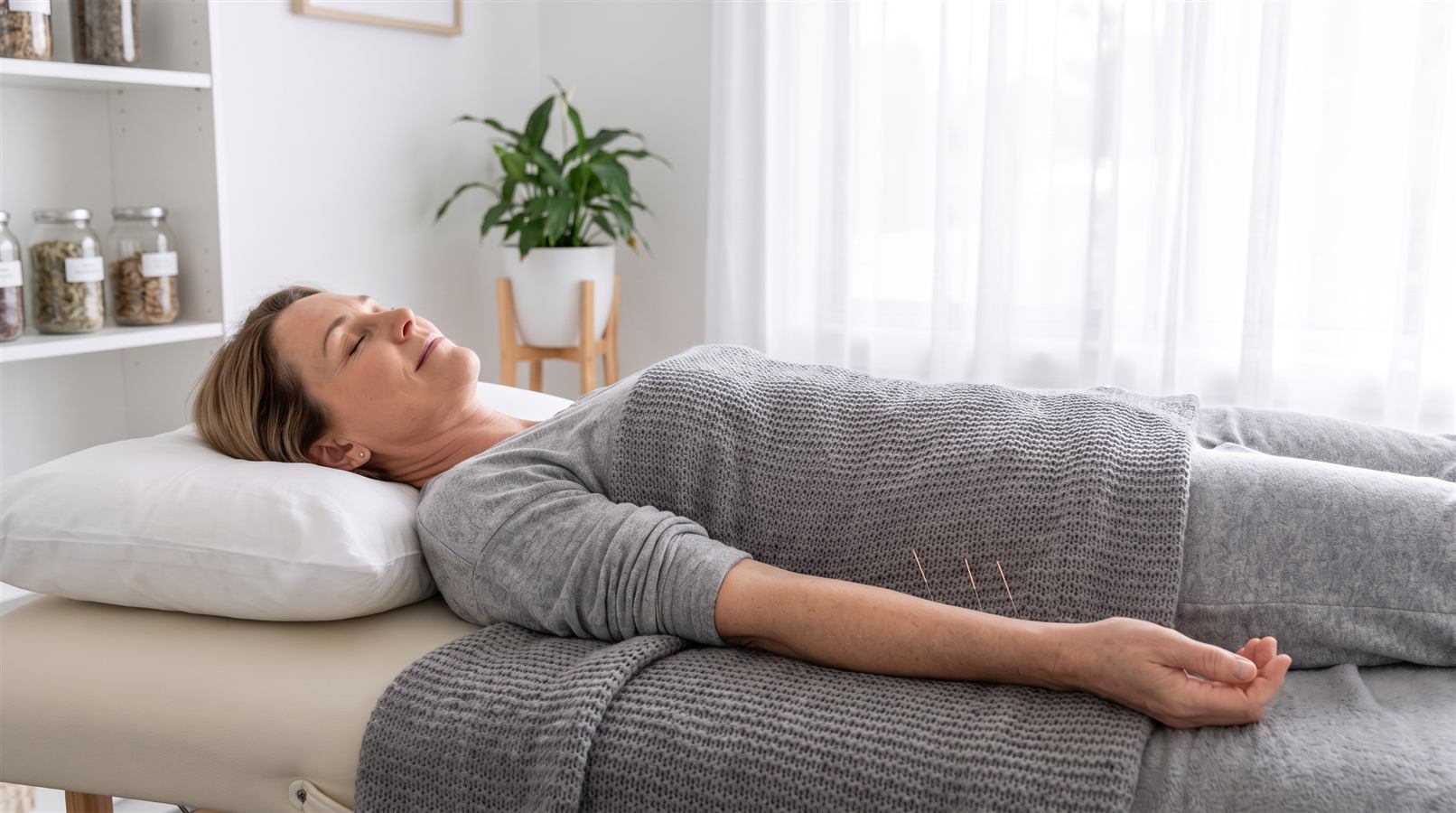
Acupuncture uses very fine, sterile, single-use needles at chosen points, often on the hands, feet, head and ears. Most people feel a brief pinch or a dull, heavy sensation, then settle. You rest for about 20 to 30 minutes with the needles in, in a quiet room. Many people relax, and some fall asleep.
Research on acupuncture for stress and anxiety is growing, but results are mixed and responses vary. We'll tell you honestly after a few sessions whether we think it's worth continuing.
What happens at the first visit?
Your first visit is an initial examination ($110, about 60 minutes) followed by your first acupuncture treatment ($120), about 1 hour 15 minutes in total. We talk through stress, mood, sleep, digestion, energy, health history and medications. Then comes a TCM assessment, including pulse diagnosis, and your first treatment. At the end we suggest a plan and explain the costs before you commit. Follow-up fees and insurance details are on our pricing page.
The clinic is at Unit 229, 1550 Enterprise Road in Mississauga, near Hwy 401 and Dixie Road, with free parking. From our old Etobicoke location it's about a 20-minute drive.
Where does stress show up in the body?
Nobody books because they're stressed. They book because of what stress has turned into: a neck that won't loosen, a jaw that aches by mid-afternoon, headaches on a schedule, sleep that won't come or won't hold. And it feeds itself. Tension disrupts sleep, poor sleep makes the next day harder, and that adds more tension.
Being told to relax doesn't help. Muscles that have been braced for months stay braced. So we treat where your body is holding it, the jaw, neck, shoulders and upper back, and use Chinese herbal medicine and nutrition where they fit. Blood sugar swinging around all day can make anxiety and poor sleep noticeably worse.
Poor sleep and stress go together. If sleep is a big part of your picture, read about acupuncture for insomnia and sleep problems and resetting your sleep cycle with TCM. Stress also affects the gut for many people, which we cover on our bloating and digestion page.
"I can walk. I can dance."
Rosa arrived with headaches, insomnia and pain through her shoulder and back, taking pills every day that had begun to hurt her stomach. She describes the change in terms of what she can do: "After the treatment, I feel more free to do my tasks. Now I am able to walk, to dance." Asked to be specific about the dancing, she was. Salsa.
On the combination of acupuncture, herbs and diet, she says she feels lighter, and that the diet worked for her because it was something she could actually follow. And about the clinic itself: "I feel like I belong. I feel peace."
"It also helped reduce my stress"
Claire came in for neck and shoulder tension running up into the jaw, with the occasional headache. Not disabling, just always there. She has been coming for about a year: "It did help reduce the muscle tension in the jaw and neck and shoulders, but it also helped reduce my stress levels as well."
She came for the muscle, and only noticed afterwards that the stress had come down too. On the needles: "It's like a bug bite. Like a little mosquito, maybe a little bit more intense. But I felt very safe and comfortable." If jaw tension is a big part of your picture, see our page on TMJ and jaw pain.
These are our patients' experiences in their own words. Everyone responds differently, and we can't promise the same results.
What helps between visits?
- Keep a regular sleep and wake time, including on weekends.
- Take short walks outside, especially in daylight.
- Try a few minutes of slow breathing, with a longer out-breath than in-breath, when you notice tension building.
- Eat regular meals and keep an eye on caffeine and alcohol, which can both make anxiety and sleep worse.
- Talk to someone. A friend, your doctor or a counsellor.
Is acupuncture safe?
Acupuncture with sterile, single-use needles is generally low-risk when done by a registered practitioner. Mild soreness or a small bruise can happen, and some people feel light-headed or very relaxed afterwards, so we suggest not rushing off. Let us know if you're pregnant or take blood thinners. Dalibor Covic is a Registered TCM Practitioner (R.TCMP), CTCMPAO #5076.
If you'd like to try it, book your first visit or call 647-342-2281 to ask questions first.
Independent information: NCCIH (US National Institutes of Health): complementary health approaches for anxiety.
Common questions about acupuncture for anxiety and stress
Can acupuncture help with anxiety?
Many people tell us they feel calmer and more settled during and after a session. Research on acupuncture for anxiety is growing but mixed, and it isn't a replacement for counselling, therapy or medication your doctor has prescribed. We see it as a support that can sit alongside that care.
Can I have acupuncture while taking anxiety medication?
Yes. Keep taking your medication as prescribed, and please don't change or stop it without talking to the doctor who prescribed it. Tell us what you take so we can plan around it.
I'm nervous about needles. Is that a problem?
It's very common. The needles are much finer than the ones used for injections or blood tests. Most people feel a light tap or a dull ache, then relax. We explain each step, start with fewer needles if you prefer, and you can pause or stop at any time.
How often would I come in?
Many people start with weekly sessions for a few weeks, then space them out as things settle. We'll suggest a plan after your first visit and adjust it based on how you respond.
What if I'm in crisis?
Acupuncture is not crisis care. If you're thinking about suicide or feel unsafe, call or text 9-8-8 (the Suicide Crisis Helpline, available across Canada 24/7), call 911, or go to your nearest emergency department.
This page is general information, not medical advice. Acupuncture works alongside the care you get from your family doctor. If your symptoms are new, severe or getting worse, see your doctor first.