Most of the people we see for digestive problems are women, and most have had the problem for months or years. Many tell us the same thing: by the afternoon their belly looks like they're three or four months pregnant. For some it happens even after a glass of water.
Many have already cut out bread, then dairy, then coffee, and the bloating still shows up. Some have had tests that came back normal. That's good news, but it leaves them without a plan. Many are also taking supplements. Some people come in with ten different ones, and they feel even more bloated.
What digestive problems do people come in for?
- Bloating that builds through the day, or a belly that feels tight and full after small meals.
- Gas and rumbling, often worse with certain foods or when eating in a hurry.
- IBS-type symptoms: cramping, urgency, loose stools, constipation, or swinging between the two.
- Reflux and heartburn, a sour taste, or a feeling that food sits too long in the stomach.
- Irregular bowel habits that change with travel, stress or shift work.
Physically, they don't feel well. They feel heavy and tired after meals, so it's hard to be productive at work. Many feel embarrassed when they see their belly in the mirror, and confused, because they don't understand why it sticks out. Over time it wears them down: if digestion isn't breaking food down into its building blocks, the amino acids and fatty acids, the body has less to repair and heal with. These problems often come with poor sleep or stress too. We ask about all of it, because it usually connects.
What is IBS, and why do tests often come back normal?
Irritable bowel syndrome (IBS) is a long-term condition with abdominal pain, bloating and changes in bowel habits, but no visible damage to the gut. It is a functional disorder: the problem is in how the gut works, not in its structure. That's why tests often come back normal while the symptoms carry on.
The exact cause is unknown. Genetics, diet, stress, past gut infections, sensitive gut nerves and changes in the gut microbiome are all thought to play a part. Most people have a mix of these, which is one reason the same treatment does not suit everyone.
Common IBS symptoms include cramping that eases after a bowel movement, bloating and gas, diarrhea, constipation or a swing between both, urgency, mucus in the stool, and a feeling that the bowel hasn't fully emptied.
IBS does not damage the bowel and is not known to raise the risk of colon cancer, but it can disrupt work days, plans and relationships. There is also a loop worth knowing about: stress makes gut symptoms worse, and unpredictable gut symptoms are stressful. The gut and the brain talk to each other all the time, which is why stress care is part of most IBS plans, in both Western and Chinese medicine.
How does Chinese medicine look at digestion?
Traditional Chinese Medicine (TCM) sees digestion as the centre of how the body turns food into fuel and nourishment. When it's under strain, we usually see one of three patterns: a weak, sluggish stomach (tiredness, bloating after eating, loose stools), an inflamed liver (bloating and cramps that flare with stress), or a microbiome imbalance (heaviness, reflux, sticky stools).
These patterns group symptoms so treatment can be planned around the whole person. Two people with the same bloating can get quite different plans. To work out your pattern, Dalibor asks detailed questions and uses TCM pulse diagnosis.
How do we treat digestive problems?
We use three things together: acupuncture, Chinese herbs and nutrition. But first we need to find out why it's happening.
First, detective work: your food and activity journal
After the initial exam, you get a food and activity journal. You write down what you eat and drink, and also how you feel afterwards. Then Dalibor goes through your journal and records a short video for you, explaining which foods are making you feel bloated, heavy or uncomfortable, why to avoid them for now, and what to eat instead.
Acupuncture: needles away from the belly
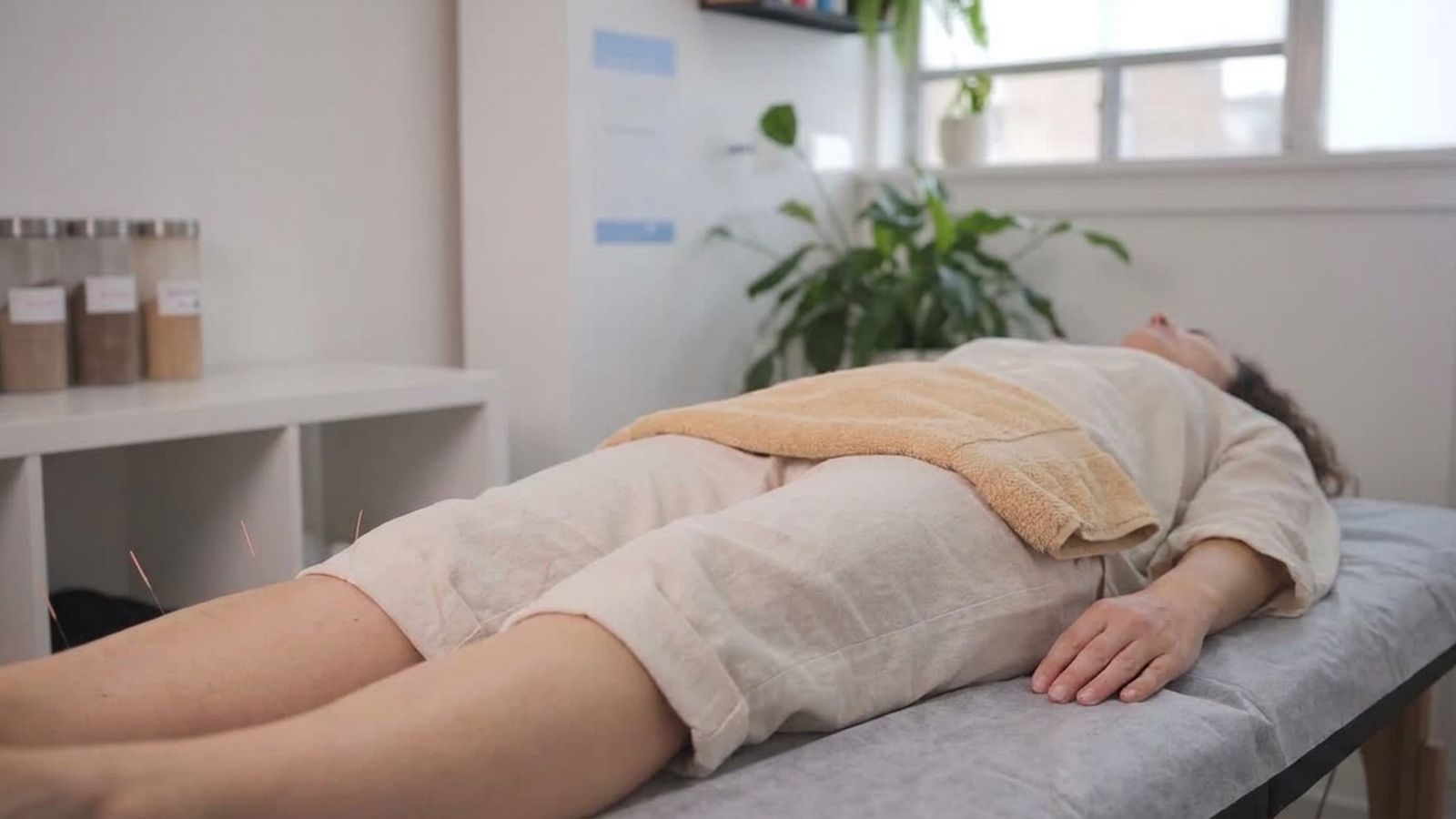
Acupuncture uses fine, sterile, single-use needles. For digestion we don't use points on the belly. The needles usually go in the forearms and upper arms, around the ankles and below the knees. In Dalibor's words: "Acupuncture stimulates blood flow to the digestive system. We can target the liver, the stomach or the gut." Many people find the session calming, which matters because stress and digestion are closely linked. Research on acupuncture for functional gut problems is growing but mixed. Some people notice changes in bloating, comfort or regularity over a course of treatment, and others don't.
Chinese herbs, matched to you
Chinese herbal medicine is prescribed based on what we find, so everybody gets something different. If the stomach is weak, the formula works on the stomach. If we need to work on the gut and the gut microbiome, we use different herbs.
Nutrition: our food guidelines
There is no way to fix digestive problems without changing what and how you eat. We say this right away at the initial exam, so your expectations are clear from the start. The food guidelines are explained below, and we go deeper with each person individually, as part of our holistic nutrition care.
One patient's story
One of our patients had severe IBS. She was in the washroom three or four times before 9 am, and up to ten times a day. Work was hard, because she kept having to leave to use the washroom. She had many food sensitivities, she was carrying extra weight, and she wanted to work out but felt too drained. She was single and wanted to meet someone to share her life with, but going out felt impossible because she was embarrassed and frustrated with her digestion.
Her food and activity journal showed the problem: a lot of wrong food combinations, and eating so many times a day that her stomach never got a rest. At the first visit we explained her care plan and she had her first treatment. It was her first time, and she found acupuncture wasn't painful. She started taking herbs and we worked on her nutrition.
After three months she basically had no symptoms. She was eating twice a day, feeling full but not bloated, sleeping better and feeling like herself again. She had lost 20 pounds, and she started going on dates, which was her biggest win.
That is one person's experience, and every body responds differently. It shows how we work: find the cause first, then treat with acupuncture, herbs and food together.
How quickly will I notice a change?
Some people notice changes within 7 days. A typical plan is acupuncture once a week, Chinese herbs every day, and changes to your food based on our guidelines, starting with a three-month care plan.
We know the plan is working when people tell us they have a good appetite again, much less bloating, and their life is changing, and when they are losing weight, if that is one of their goals. If someone stalls, we sit down together and look for the reason. Most of the time, it is that the food guidelines aren't being followed.
What happens at the first visit?
Your first visit is an initial examination ($110, about 60 minutes) followed by your first acupuncture treatment ($120), about 1 hour 15 minutes in total. It has three parts:
- We listen. Your digestion, eating habits, sleep, stress, energy and medical history, including any tests you've had.
- We assess. A TCM assessment, including your pulse, to understand the pattern behind your symptoms.
- We treat and plan. Your first acupuncture treatment, then a plan that may include more sessions, herbs or food and routine changes, with costs explained before you decide. You also get your food and activity journal to start.
Follow-up fees and insurance information are on our pricing page. The clinic is at Unit 229, 1550 Enterprise Road, near Hwy 401 and Dixie Road, with free parking, about 20 minutes from Etobicoke.
What food and habits help with bloating?
The three things Dalibor tells people most often:
- Don't eat if you're not hungry. Real hunger is hunger for a good source of protein and fat, like steak, eggs or an omelette. If you're hungry for sweets, that's the wrong signal.
- Stop eating all the time. Many people eat six times a day. That's fine for a two-month-old baby, not for an adult. Your digestive system needs rest. If food is always coming in, it never gets the chance to heal.
- Watch your food combinations. Very often people mix the wrong types of food together. Your food journal shows us which ones are a problem for you.
Other things we often talk through:
- How you eat, not only what. Eating quickly, at your desk or in the car, tends to make bloating worse. Sitting down and chewing well is a simple place to start.
- Warm, cooked food. From a TCM view, a lot of raw, cold food and iced drinks can be harder on a sensitive gut. Soups and cooked vegetables are often easier.
- Fewer supplements, not more. Some people come in taking ten different supplements and feel more bloated. Bring them to your first visit and we'll go through them.
- Sleep and stress. Many people notice their gut is worse in stressful weeks. If that's you, see acupuncture for stress and anxiety. If you know which foods upset you and keep eating them anyway, read how Dalibor and Nata worked on that together in Yin & Yang: body and mind.
For more background, read our piece on fatty liver disease, which covers how diet and liver health connect.
When should I see a doctor first?
Is acupuncture safe?
Acupuncture with sterile, single-use needles is generally low-risk when done by a registered practitioner. Mild soreness or small bruises at needle sites can happen. Dalibor Covic is a Registered TCM Practitioner (R.TCMP) with the College of Traditional Chinese Medicine Practitioners and Acupuncturists of Ontario, registration #5076.
If you'd like to see whether this approach suits you, book your first visit or call 647-342-2281 with questions first.
Independent information: Cochrane review: acupuncture for irritable bowel syndrome.
Common questions about bloating, digestion and acupuncture
Can acupuncture help with bloating?
Some people find their bloating and digestive comfort change with a course of acupuncture alongside diet and routine changes. Research on acupuncture for functional gut problems such as IBS is growing but mixed, so we can't promise a result. After your first visit we'll tell you honestly whether we think it's worth continuing.
Can acupuncture help IBS?
Many people with IBS-type symptoms come to us. Treatment combines acupuncture, nutrition advice and sometimes herbs, matched to your symptoms. Get any new or changing bowel symptoms checked by your doctor first.
Can acupuncture replace my IBS medication?
No. Acupuncture is used alongside medical care, not instead of it. Keep taking what your doctor prescribed and talk to them before changing anything.
What should I eat to stop bloating?
It depends on what triggers yours, so there's no one list for everyone. Holistic nutrition helps you find your triggers and build meals that agree with you, without a joyless diet.
Do I have to stop eating certain foods?
Usually, yes, for a while. First you keep a food and activity journal for us. Then Dalibor goes through it and records a short video for you, explaining which foods are making you bloated or heavy, why to avoid them for now, and what to eat instead. There is no way to fix digestive problems without changing what you eat.
Should I see my doctor before booking?
Yes, promptly, if you notice blood in your stool, unexplained weight loss, trouble swallowing, persistent vomiting, a big change in your bowel habits, or symptoms that are new or getting worse. If you've already been checked and told there's nothing structurally wrong, acupuncture can be part of your care alongside your doctor.
What does the first visit cost?
The first visit is an initial examination ($110, about 60 minutes) followed by your first acupuncture treatment ($120), about 1 hour 15 minutes in total. Follow-up treatments are $120. More fees and insurance details are on our fees page.
How many sessions will I need?
It depends on how long you've had symptoms and what else is going on. A typical plan starts with three months: acupuncture once a week, Chinese herbs every day, and changes to your food. Some people notice changes within 7 days. We review the plan as we go.
Do you put needles in my belly?
No. For digestion we usually place needles in the forearms and upper arms, around the ankles and below the knees, to stimulate blood flow to the digestive system.
This page is general information, not medical advice. Acupuncture works alongside the care you get from your family doctor. If your symptoms are new, severe or getting worse, see your doctor first.