"Before, I had a migraine maybe once a month," she said. "The last few months, it's almost every week." Two days in a row that week, the pain was so bad she had to take the strong medication her neurologist gave her, the one she had hoped not to need.
Migraines after having a baby are something I hear about often. Here is her first visit, because it shows how we look at migraines, and why the head is not the only place we look.
What she told me
- Migraines for twenty years, but never this often or this strong.
- Five to six hours each time, with the first two or three hours the most intense.
- It starts at the temples, one side or the other, then spreads over the head and down into the neck.
- An aura before the attack, and a feeling like a tight band wrapped around her head.
- Burning eyes. Closing them gave some relief, but even that hurt.
- Light and sound sensitivity. She needed a dark, quiet room and to be left alone.
- Grey, rainy weather often brought one on.
"I don't want to live on painkillers"
For years she took over-the-counter painkillers. Her neurologist warned her that taking them too often can cause rebound headaches, and gave her a daily preventive pill and a stronger medication for attacks. She took them, because some days there was no other way through. But she told me clearly: she didn't want to depend on pills.
When I asked how the migraines made her feel, she said: helpless, demotivated, and asking herself "why is this happening to me?" On a migraine day she could hardly look after her little girl.
What would "better" look like?
I always ask this, because "I want to feel good" is hard to measure. For her it was simple: fewer migraines, and less intense when they come. Longer gaps in between. And one day, carrying on with her life without worrying about the weather forecast or whether the pills are in her bag.
I told her what I tell everyone: there is no magic pill. It's a process, more like a marathon than a sprint.
She had tried acupuncture before
A few years earlier she had regular acupuncture for migraines at another clinic, and she was almost migraine-free for a long time. She remembered one point on her little toe that was sore but helped a lot. That is the odd part of acupuncture: for a headache, some of the most useful points are far away from the head.
The neck: almost always part of the story
When I asked about her neck, she said: tight, stiff, painful. Migraines are not always 100% about the neck. But I have never seen somebody with migraines who doesn't have a problem with the neck. When the neck muscles stay tight, the blood vessels between them are squeezed, less blood gets through, and the area starts to complain.
What the pulse showed: the liver
Chinese medicine reads the pulse at the wrist to feel how blood flows through different organs (see pulse diagnosis). Her heart pulse was strong. What worried me was her liver.
I asked if anyone had told her about a fatty liver. She said yes, a test earlier this year had shown it, but nobody explained what it meant or what to do. I also asked her to check her blood sugar, because a fatty liver often comes before prediabetes.
I didn't say this to scare her. I said it to empower her, because a fatty liver is reversible. Chinese medicine doesn't see the head as separate from the rest of the body. Fixing the liver may not take the migraines away completely, but they are likely to come less often and be less intense. And if nothing changes, other problems tend to creep in over the next few years.
How we help with migraines
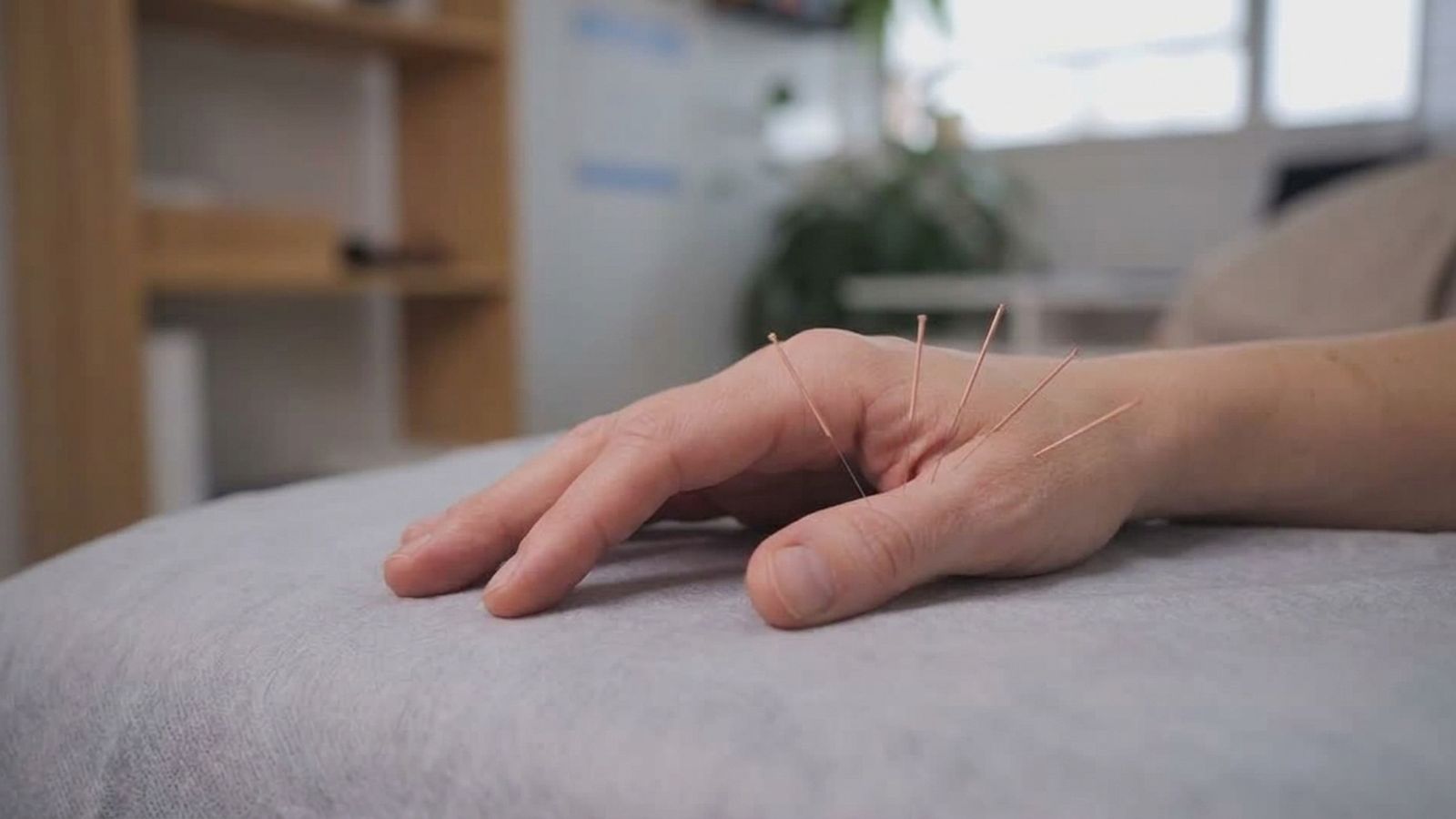
- Acupuncture works through the nervous system. A tiny needle, about as thin as a hair, stimulates the nerves, and the signal goes to the brain and to the tight areas. Blood flow improves, muscles relax and the body starts to heal itself. We use points for the migraine attack, for the eyes and for the neck.
- Chinese herbs help the organs that don't work properly, in her case the liver.
- Nutrition, because the liver depends on what we eat.
She already worked with a physiotherapist, a massage therapist, a naturopath and a nutritionist. That's good, and I don't want to interfere with someone else's work. So the choice is hers: acupuncture only, or the full plan.
Why three visits in the first week
She asked if she could come once every two weeks. I told her honestly: that won't help much right now. Think of the gym. If a friend tells you they'll go twice a month, will they see real changes? Acupuncture has a cumulative effect too. When migraines come every week, I suggest three visits in the first week, then we see how you respond and space them out. Because of her other appointments she could do two the next week, so we started with today's treatment and two more.
One practical tip: eat before your treatment. And if you sometimes feel lightheaded during a migraine phase, have someone drive you, as she does.
Related reading
Our migraine and headache acupuncture page explains our approach in more detail. If your neck is always tight, read stiff neck relief and is acupuncture good for neck pain? If sleep has fallen apart since the baby, see resetting your sleep cycle. Not sure acupuncture fits you? Start with is acupuncture right for my pain?
When to see your doctor first
Go to your doctor or the emergency room for a sudden, severe headache unlike any you have had before, a headache with fever and a stiff neck, weakness, numbness, confusion or trouble speaking, a headache after a head injury, or a new headache pattern after age 50.
Book a first visit
Your first visit is an examination with me ($110) and your first treatment ($120). You'll leave knowing what I think is going on, what a plan looks like and what it costs. Aculosophy Acupuncture Clinic, Unit 229, 1550 Enterprise Road, Mississauga, near Hwy 401 and Dixie Road. Book online or call 647-342-2281.
Common questions about migraines and acupuncture
Why did my migraines get worse after having a baby?
Many things change at once: broken sleep, hormones, going back to work, less time for yourself and a lot more stress. Migraines often get worse when the body has no time to recover. In this case we also found a tight neck and a liver problem that nobody had explained to her.
Why do you put needles in my hands and feet when my head hurts?
Acupuncture works through the nervous system. A small needle stimulates nerves, and the signal travels to the brain and to the area that is tight or painful. That is why many of our points are on the hands, feet and lower legs, away from the head.
How often should I come for migraines?
Acupuncture has a cumulative effect, so it works better when visits are close together at the start. When migraines are frequent, I usually suggest three visits in the first week, then we look at how you respond and space the visits out.
Should I stop my migraine medication?
No. Keep taking what your doctor prescribed. If your migraines become less frequent and less intense, talk to your doctor about any change to your medication.
Can I combine acupuncture with physiotherapy, massage or a nutritionist?
Yes. If you already work with someone, I don't want to interfere. You decide whether you want acupuncture only, or the full plan with acupuncture, Chinese herbs and nutrition.
This page is general information, not medical advice. Acupuncture works alongside the care you get from your family doctor. If your symptoms are new, severe or getting worse, see your doctor first.