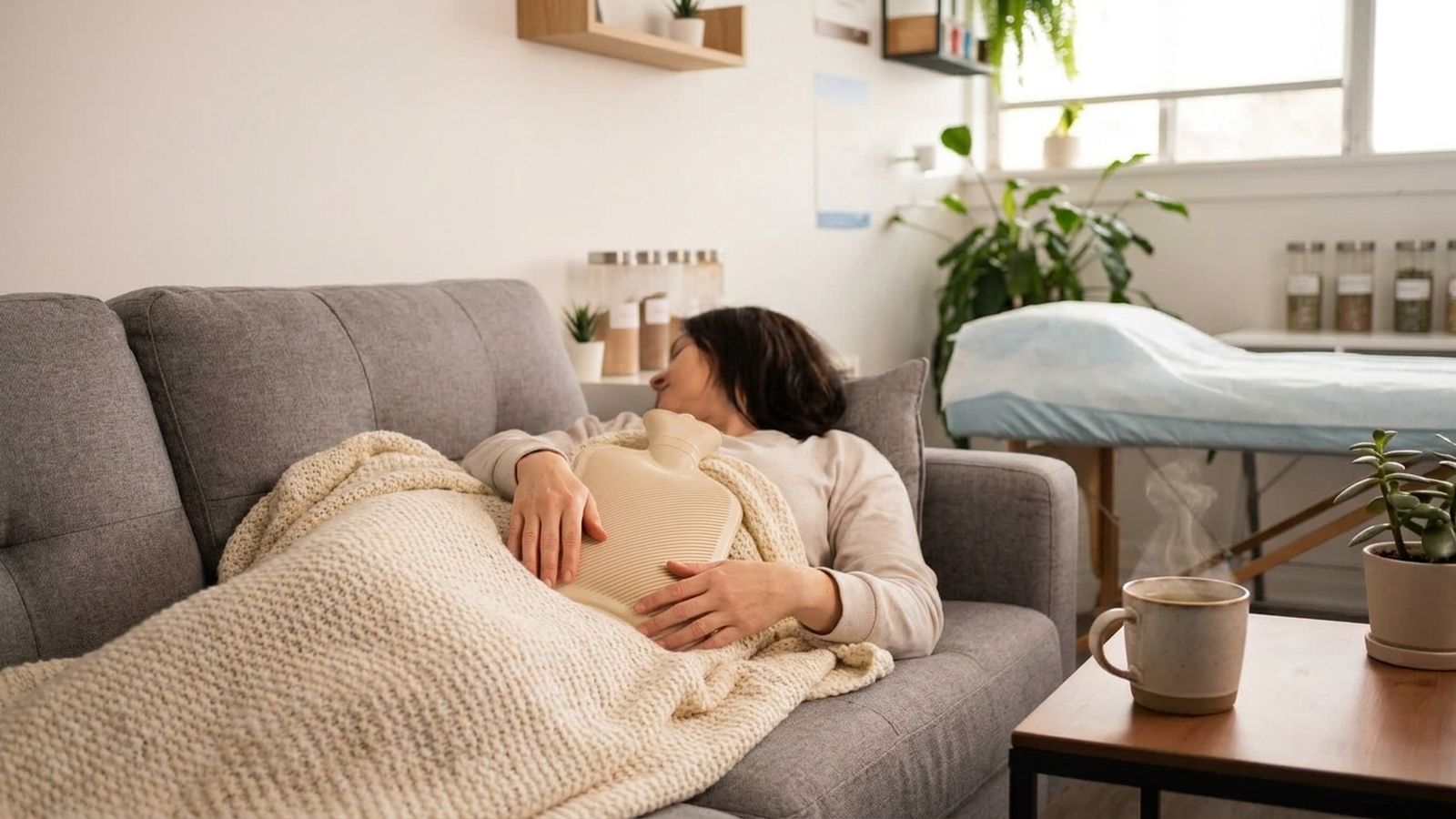
Many women tell me, "My periods have always been painful. That's just how it is." I understand why they think so. They've had pain since their first period, their mother had it, and they've often been told it's part of being a woman. Traditional Chinese medicine has a different view, and I'd like to show you what a period should look and feel like.
What does a normal period look like?
From a Chinese medicine point of view, a healthy period:
- Comes regularly. Your cycle could be 25, 28 or 30 days. What matters is that it's regular for you.
- Isn't painful. You may feel something, but not pain that makes you take painkillers or stops you from doing things in your life.
- Is bright red, with enough blood for about four or five days.
- Lets you get on with your life without any problems.
There's a big misconception nowadays, even in the medical community, that periods are supposed to be painful. Period pain is common, but I don't believe it's normal. Chinese medicine has been used for thousands of years, and over that time practitioners have built up a lot of experience with women's cycles. In that tradition, a period shouldn't hurt.
Video: what a healthy period looks like
If you're taking painkillers every single month for your period, then this video is for you. Stats in Canada show that 60% of women describe moderate or severe pain, and 17% of them have to skip school or miss a day of work because of painful periods.
Your period should be regular. What does that mean? Somebody has a period every 28 days, it might be 26 days, it might be up to 30 days, but regular means it comes every month like clockwork. So regularity is first. It should not be painful. The blood should be bright red, just like when you cut yourself, and there should be no blood clots.
Most of the time, clots point to blood stagnation in the uterus. In Chinese medicine we call that a cold uterus. And your grandma knew it: one of the channels, the kidney channel, starts at the feet, goes up and passes through the uterus. Your grandma was right. Don't walk barefoot on the tiles, and don't expose this part of your body when it's cold.
So remember, a period shouldn't be painful. You should be able to do everything on those few days of the month. You should be able to live your life.
Why does period pain happen?
In Chinese medicine, most period pain comes from what we call blood stagnation, which simply means the blood doesn't flow properly. Cold makes this worse. When the blood doesn't flow well, you get cramps and often blood clots. That's why so much of what I do is about improving blood flow to the pelvic area. You can read more on our acupuncture for painful periods page.
Who comes to see me for period pain?
Most women who come in are between 18 and their 40s. Usually they've had pain for a long time. Some had easy periods until they had a baby, and the pain started after the delivery.
Most of them take painkillers every month, and they don't want to keep relying on them. They've tried heating pads, but they know that's only temporary relief. Some heard from a friend that we helped her. Others just know, deep inside, that they shouldn't have to go through this pain every month.
Many are also planning a pregnancy. Regular cycles matter when you're trying to conceive, and painful periods are one sign that your cycle isn't as balanced as it could be. If that's you, see our page on fertility acupuncture.
One patient's story
One of my patients had period pain for 15 years. At her first visit I explained why it was happening for her and laid out a care plan. She came in once a week for acupuncture, took her herbs every day and changed her diet.
After the first month she started to feel better: less pain and fewer blood clots. That motivated her to keep going. By the end of the third month she had no blood clots, no period pain and no painkillers. That was five years ago, and she still comes in once a month because she wants to keep the ball rolling.
That is one woman's experience, and every body responds differently. It does show why I look at the whole cycle, not just the painful days.
When should you see your doctor or gynecologist first?
Please see your doctor or gynecologist before acupuncture if you have:
- constant bleeding;
- sharp, stabbing pain that doesn't go away, even after your period is over;
- a lot of bleeding between periods;
- swelling or a bloated feeling in the lower belly that has never been there before.
Our period pain page has the full list of warning signs, including when to go to emergency.
What to do the week before your period
If I could ask every woman to start one thing, it would be this: keep your feet warm and your belly warm in the week before your period. Warmth helps the blood flow.
And stop the cold. Cold drinks, ice cream and other cold food cool your body down, and cold slows blood flow, which is exactly what we don't want before a period. Very often, women with period pain eat a lot of cold and inflammatory food without realizing it. Our holistic nutrition page explains how we look at food, and my article on hypothyroidism explains how Chinese medicine sees warming and cooling foods.
Sleep and stress matter too. If your sleep is all over the place before your period, my article on resetting your sleep cycle has simple steps.
How does treatment for period pain work?
Many women feel relief during the very first treatment. To change the pattern behind the pain, a plan usually lasts three months, with acupuncture once a week. If you live far away, we can work with herbs only, and then we usually see you about once a month.
Chinese herbs are a big part of the plan, because they're used to reduce the blood clots that go with period pain. Before choosing them, I check your pulse. You can read how that works on our pulse diagnosis page.
Already on the pill? We can still work with you. Taking painkillers? That's fine too. Most women take them during their period, so we work on the rest of the month, to regulate the cycle so that over time you either don't need painkillers or you stop taking them. Keep following your doctor's advice about any medication.
If you'd like to know whether acupuncture could fit your kind of pain in general, I explain how I decide in is acupuncture right for my pain?
Book a first visit
Your first visit includes an examination with me ($110, about 60 minutes) and your first acupuncture treatment ($120). At the end I'll explain what I think is going on, what a plan would look like and what it costs, before you commit to anything.
Aculosophy Acupuncture Clinic in Mississauga is at Unit 229, 1550 Enterprise Road, near Hwy 401 and Dixie Road, with free parking. Every visit is with me, Dalibor Covic, R.TCMP. Book a first visit or call 647-342-2281.
Common questions about period pain
Is it normal for periods to be painful?
Period pain is common, but in Chinese medicine a period shouldn't hurt. A healthy period comes regularly, is bright red, lasts about four or five days and lets you get on with your life without painkillers.
Why does period pain happen in Chinese medicine?
Most period pain comes from what Chinese medicine calls blood stagnation: the blood doesn't flow properly, and cold makes it worse. That is linked with cramps and blood clots, so treatment focuses on improving blood flow to the pelvic area.
When should I see a doctor about period pain?
See your doctor or gynecologist first if you have constant bleeding, sharp stabbing pain that doesn't go away even after your period, a lot of bleeding between periods, or new swelling or bloating in the lower belly.
How long does acupuncture treatment for period pain take?
Many women feel relief during the first treatment. To change the pattern behind the pain, a plan usually lasts three months with acupuncture once a week, often with Chinese herbs. Results vary from person to person.
This page is general information, not medical advice. Acupuncture works alongside the care you get from your family doctor. If your symptoms are new, severe or getting worse, see your doctor first.