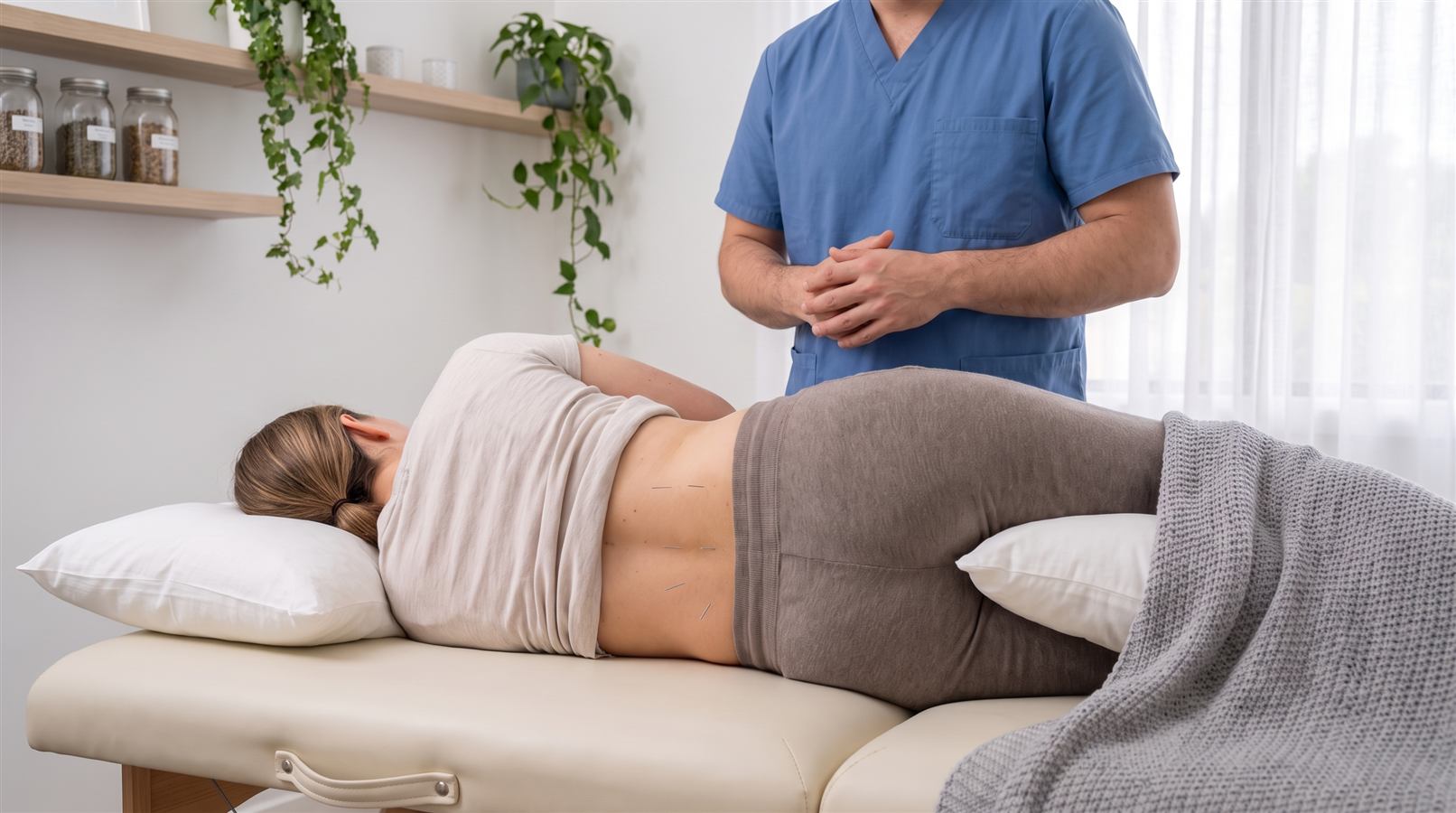
If putting on your socks has become a strategic operation, you're not alone. Low back pain is one of the most common reasons people come to our Mississauga clinic. Sometimes the back "goes out" in one moment, lifting a box or getting out of the car. Sometimes it builds up over months of desk work and lifting. We work alongside your family doctor and any other practitioners you see.
Video: why low back pain won't go away
In this short video Dalibor explains why low back pain often builds up from many small injuries, why tight muscles keep the area from healing, and how acupuncture helps the muscles let go.
Visiting our Mississauga clinic
- Where: Unit 229, 1550 Enterprise Road, Mississauga, near Hwy 401 & Dixie Rd. Free parking at the building.
- Hours: Tuesday and Friday 9 to 2, Wednesday and Thursday 2 to 6, Saturday 9 to 2.
- Getting in: the online calendar shows open times right away. New patients can usually get in the same week, and urgent cases are usually seen the same day. We don't have evening hours.
- Who comes: patients from across Mississauga, Etobicoke, Milton, Oakville and the rest of the GTA.
- Who we see most: office workers, drivers, retirees, active people who play a lot of sports, construction and warehouse workers, and first responders.
- Car accidents and work injuries: we don't treat car accident or WSIB work-injury claims, and we don't bill auto insurance or WSIB.
- What to wear: loose clothes. For the low back you usually lie face down with the lower back uncovered and the rest of you draped.
What causes lower back pain?
- Muscle strain and spasm. The most common cause. Lifting, twisting or a long day of sitting can leave the lower back muscles tight and sore.
- Sciatica. Irritation of the sciatic nerve, with pain that runs into the buttock and down the leg. See our page on acupuncture for sciatica.
- Disc herniation. A tear in the outer layer of a disc lets the softer centre press outward, sometimes on a nerve.
- Degenerative disc changes. With age, discs lose water and height and can crack or dry out.
- Facet joint irritation. Inflammation in the small joints at the back of the spine, often worse when leaning back.
- Spinal stenosis. Narrowing of the spinal canal, which can cause leg pain when walking or standing.
What helps low back pain?
Most low back pain gets better with time and the right care. What usually helps:
- Keep moving within comfort. Short, regular walks usually help more than lying in bed. More tips in how to relieve lower back pain at home.
- Break up sitting. If you work at a desk, stand up every 10 minutes for a moment and stretch a little. Set a reminder on your phone.
- Calm the muscle spasm early. The longer a muscle stays tight, the more it squeezes the small blood vessels in it, and the harder it is for the area to heal. This is where acupuncture comes in.
- Build strength once the pain settles, so the muscles around the spine can protect it again.
- See your doctor about medication and to rule out anything serious (see the warning signs below).
Acupuncture, physiotherapy, osteopathy or chiropractic: what's the difference?
All four are common choices for low back pain in Mississauga, and they work in different ways. Many people combine them.
- Physiotherapy focuses on exercise, strength, movement and posture, so your back can handle daily life again.
- Osteopathy is a gentle, hands-on therapy for the bones, muscles and joints, using soft tissue work, mobilisation and manual techniques to help the body move and heal. I compare it with acupuncture in osteopathy or acupuncture: what's the difference?
- Chiropractic focuses on the spine and joints, often with spinal adjustments and mobilisation.
- Acupuncture uses very fine needles to calm muscle spasm and pain, through points on the back and on the arms and legs. In Traditional Chinese Medicine it also looks at what keeps the pain coming back: sleep, stress, tiredness and old injuries.
If you already see a physiotherapist, osteopath or chiropractor, acupuncture can sit alongside that care. Keep doing the exercises they give you.
We don't offer osteopathy or physiotherapy at Aculosophy. If you're looking for them in Mississauga, HL3 Healthier Living has osteopaths and physiotherapists on its team.
Tried physio or chiro and still in pain?
Many people come to us after other treatment helped for a while and then the pain came back. That doesn't mean that treatment was wrong. Often the muscles around the low back are still in spasm, and with long-standing pain the body keeps tightening around the area to protect it. Tight muscles squeeze the blood vessels, less oxygen and fewer nutrients reach the area, and it struggles to heal.
Acupuncture works on that part: needles placed away from the sore area stimulate nerves that signal the brain, and the brain starts to release the tension in the low back. The aim is to break the circle, so the strength work from your physiotherapist can do its job.
Is acute back pain treated differently from chronic pain?
Yes. Traditional Chinese Medicine separates pain that has just started from pain that has lasted for months. A recent strain is usually treated with fewer, gentler needles and a focus on calming muscle spasm. Long-standing pain is looked at more broadly: sleep, stress, energy, old injuries and how you sit, lift and move all become part of the picture.
What does the assessment look at?
Dalibor asks where the pain is, whether it spreads into the buttock or leg, what triggers it, how it affects sleep and work, and what imaging or treatment you have already had. He then checks how you bend and twist, where the muscles are tight or tender, and whether there are signs of nerve involvement. As part of our acupuncture approach, the assessment also includes pulse diagnosis to understand the wider pattern. If anything points to a problem that needs medical tests first, we will say so.
How does acupuncture for back pain work?
Very thin, sterile, single-use needles are placed at points in the lower back and hips, and often at distance points in the legs, hands or feet. Needling is thought to change local blood flow and nerve signalling and to affect how the central nervous system processes pain. The American College of Physicians' 2017 guideline lists acupuncture among the non-drug options for chronic low back pain, and research in this area continues. Results vary from person to person.
For some people, Dalibor adds mild electrical stimulation to pairs of needles. This is called electro-acupuncture, and it feels like a light tapping or buzzing that you control. Our article on electro-acupuncture explains how it works. For a longer read on the ideas behind treating back pain, see The self-healing body.
Needles usually stay in for 20 to 30 minutes while you rest.
How many treatments does low back pain usually need?
A back that went out last week and a back that has hurt for ten years are different problems, so the number of visits is different too. A fresh strain often settles faster, especially if you come in early while the muscles are still in spasm. Pain that has been there for months or years usually takes longer, because the muscles, sleep and the way you move have all adapted to it.
For low back pain we start close together, so each treatment builds on the last before the muscles tighten up again: usually 2 to 3 treatments a week for the first two weeks, then 2 a week in weeks 3 and 4. That's typically 8 to 10 visits in the first month. The first three treatments tell us how quickly your back responds. After that, we reassess together and adjust the plan, or tell you honestly if acupuncture isn't the right fit.
How can I look after my back between visits?
- Keep moving within comfort. Short, regular walks usually help more than bed rest.
- Break up long periods of sitting. Stand up and move every 30 to 45 minutes.
- Lift with your knees and keep loads close to your body. Avoid lifting and twisting at the same time.
- Notice how you sleep. A pillow between the knees (on your side) or under the knees (on your back) takes strain off the lower back for many people.
- If a physiotherapist has given you exercises, keep doing them.
When should I see a doctor instead?
Go to an emergency department straight away if back pain comes with numbness in the groin or inner thighs, new trouble controlling your bladder or bowels, or weakness in the legs that is getting worse. See your doctor promptly if the pain follows a fall or accident, comes with fever or unexplained weight loss, is constant and worse at night, or if you have a history of cancer. Once serious causes are ruled out, acupuncture can fit alongside your medical care.
Is it safe?
Acupuncture with sterile single-use needles is generally low-risk when performed by a registered practitioner. Some people notice minor bruising or brief soreness at a needle site. Please tell us about any medications, especially blood thinners, and whether you are or might be pregnant. We do treat pregnant patients, for example for back pain in pregnancy. Keep your doctor or midwife informed, and see them first if the pain is severe or new.
What does it cost, and is it covered?
Your first visit is $230: an initial examination ($110) and your first acupuncture treatment ($120), about 1 hour 15 minutes in total. After that, Dalibor puts together a care plan with you, with payment options, so you know the number of visits and the cost before you commit. Follow-up treatments are $120. Many extended health plans cover acupuncture by a Registered TCM Practitioner; check your plan for limits. Full details are on our fees and insurance page. The clinic is at Unit 229, 1550 Enterprise Road in Mississauga, with free parking, about 20 minutes from Etobicoke via the 427 and 401.
When you are ready, you can book a first visit online or call 647-342-2281.
For an overview of how we treat all kinds of pain, see acupuncture for pain relief in Mississauga.
Independent information: NCCIH (US National Institutes of Health): low back pain and complementary health approaches.
Common questions about low back pain and acupuncture
Is acupuncture good for lower back pain?
Lower back pain is one of the conditions acupuncture is most often used for, and many medical guidelines list it as an option for chronic low back pain. Dalibor combines it with practical advice on movement and sitting. Results vary from person to person.
Acupuncture or physiotherapy for back pain?
They work well together. Physiotherapy builds strength and movement; acupuncture helps with pain and muscle tension. Many of our patients do both.
How long does acupuncture take to work for back pain?
Some people feel looser after the first visit. Long-standing pain usually needs a series of treatments. Dalibor will tell you what to expect after your assessment.
When is back pain an emergency?
Go to the emergency department if back pain comes with loss of bladder or bowel control, numbness in the groin, or weakness in the legs that keeps getting worse.
Can acupuncture help with a disc herniation?
People with disc bulges and herniations often come in for acupuncture to help manage pain and muscle guarding while the disc settles. It does not change the disc itself. If you have leg weakness, numbness or bladder or bowel changes, see a doctor first.
Should I come in during a flare-up or wait until it calms down?
You can come in during a flare-up. Treatment is gentler when pain is acute, and positions are adjusted so you can lie comfortably. If you cannot get onto a table at all, call us first so we can plan the visit.
Can acupuncture replace my pain medication?
Acupuncture can be part of a pain management plan, and some people hope to rely less on medication over time. Any change to prescribed medication should be decided with your doctor or pharmacist, not stopped on your own.
What should I wear to an appointment?
Loose, comfortable clothing. For low back treatment you will usually lie face down with the lower back uncovered, and you are draped with a sheet or towel for the rest.
This page is general information, not medical advice. Acupuncture works alongside the care you get from your family doctor. If your symptoms are new, severe or getting worse, see your doctor first.