Lower back pain is one of the most common reasons people come to see us. We see new people with it a few times a week, and they usually tell us the same thing: they have been dealing with it for a long time, a few weeks or a few months.
It shows up in everyday life in different ways. Some people can't sleep because they can't find a good position, or the pain wakes them up. Some can't play their favourite sport anymore. For others, even cooking is hard, or they can't focus in meetings at work because their back hurts.
Most people try painkillers first. Very often, after about a week, they realize that isn't solving anything. Here is what I tell my patients to do at home, the mistakes I see most, and when it's time to get help.
Three things that help lower back pain at home
1. Use heat, about three times a day
If your lower back pain has been there for a while, apply something warm for 10 to 15 minutes, about three times a day. Heat increases blood flow to the area and reduces muscle spasm.
2. Keep moving with simple activity like walking
Simple activity, like walking, creates more blood circulation in the lower back. We want more blood flow there, because blood carries the oxygen and nutrients that the injured area needs to heal.
3. Change your position often
With lower back pain, the muscles go into a protective spasm. Many people then sit for hours without moving. Sitting puts more pressure on the lower back than standing does, so long periods of sitting keep the stiffness going. If you sit a lot, stand up and move every 10 minutes.
The most common mistakes I see
- Bending into the pain again and again. People keep bending in a way that hurts. Basically, they keep injuring themselves.
- Not moving at all. Staying still stops the body from increasing blood circulation to the area that needs it.
- Using ice for weeks. Some people keep putting ice on a back that has hurt for weeks. I don't agree with that. Cold narrows the blood vessels. From my clinical experience, after 10 years of practising acupuncture, heat is the better option once the first couple of days have passed.
- Stretching through pain. More about this in the story below.
Heat or ice for lower back pain?
Ice may help in the first two days, because it can reduce inflammation. After that, I would switch to heat. Heat relaxes the muscles, and with relaxed muscles we get better blood circulation in that area, so it can heal.
A real example: when stretching made it worse
One of our patients was trying to fix his lower back by stretching all the time. He felt pain during the stretches, but he thought that was the right way to look after himself. After four weeks of this, he was feeling worse and worse.
At the initial exam I found out what he was doing. He had a muscle injury in his lower back, and I explained that by constantly over-stretching, he kept stopping his body from healing that tear. I asked him to stop that activity, or at least slow it down, and I showed him other ways to stretch his tight hamstrings without involving his lower back.
Once he understood where the problem was, we started treatment. He came three times a week for the first two weeks, then twice a week. He kept stretching, but now in a way that kept his lower back muscles safe. After about a month, he was pain-free and back to playing tennis.
That is one person's experience, and every body responds differently. It shows why it helps to find out what is actually keeping the pain going.
When home care isn't enough
It's time to get your back treated when:
- the pain hasn't improved after about three days, stays the same, or is getting worse
- the pain keeps lingering even though you've tried heat, cold, painkillers and stretching
The sooner we start treating pain, the shorter the healing process usually is. It takes time for the body to heal; you just need to create the right conditions. Acupuncture helps with that, because it improves blood circulation and, as I explain to my patients, it helps retrain the brain to support the body's own healing. I write more about this in the self-healing body.
When to see a doctor first
See a doctor first, or go to the emergency department, if you have:
- strong shooting pain down the legs (see also sciatica)
- loss of control of your bladder or bowels, or trouble passing urine
- a pulsating pain in the lower back
- numbness in the groin or inner thighs, or a leg that is getting weaker
- back pain after a fall or accident, or with fever or unexplained weight loss
How I treat lower back pain with acupuncture
The first thing we do is an initial exam, so I can understand where the pain is coming from. Is it the muscles or the joints? Is the spine involved? Could there be a herniated disc? We treat based on the clinical picture we find.
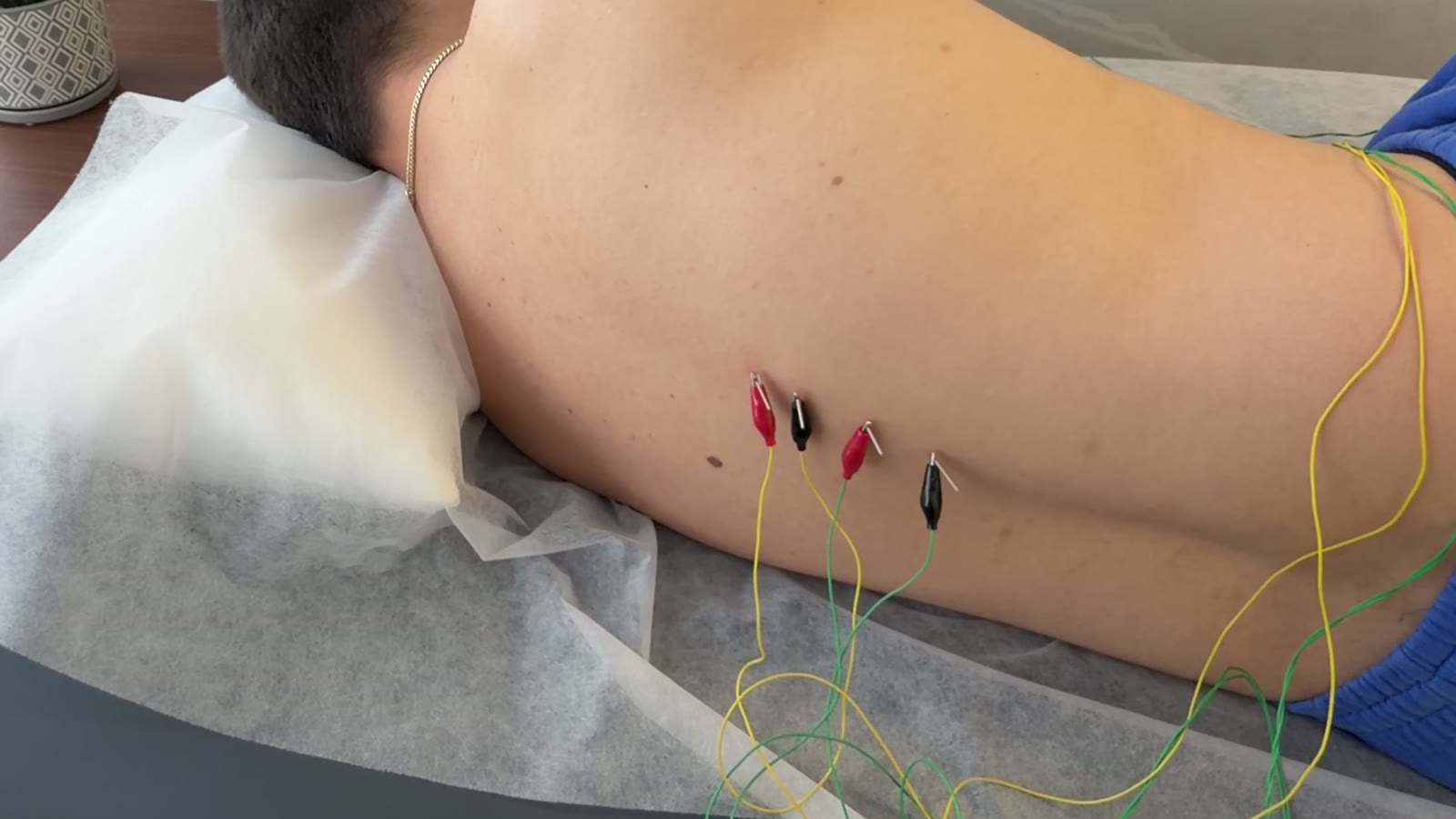
Depending on that, I choose local treatment, with points around the painful area, or distal treatment, with points away from the pain. With distal points we stimulate receptors that send a better signal to the brain, and the brain starts to release endorphins and enkephalins, the body's natural painkillers. As we get older, this communication between the body and the brain gets weaker, and that is one reason pain becomes chronic. Acupuncture aims to jump-start it and support the body's healing process. When muscles need more help, I may add electro-acupuncture.
Most people with this kind of pain follow a one-month plan: two to three treatments a week for the first two weeks, then two a week, and then we reassess. You can read how I decide whether it's working in is acupuncture right for my pain?
Why I wish more people started sooner
I wish more people understood that the sooner they work on the problem, the sooner they get results, and the more complications they avoid. With lower back pain you can't work out and you can't go for a walk. The pain wears you out. When you feel tired all the time and can't do the things you like, it affects you psychologically too. People get anxious and grumpy, and they snap at their kids and the people they love. That's why I'd like people to be more proactive.
If your lower back pain isn't settling, our clinic is in Mississauga, near Hwy 401 and Dixie Road, with free parking. Read more about acupuncture for lower back pain, book your first visit online, or call 647-342-2281.
Common questions about relieving lower back pain at home
Is heat or ice better for lower back pain?
Ice may help in the first two days after an injury, to calm inflammation. After that, I recommend heat. Heat relaxes the muscles and brings more blood flow to the area, so it can heal. For chronic lower back pain, use heat, not ice.
How often should I use heat on my lower back?
I tell my patients to apply something warm for 10 to 15 minutes, about three times a day.
Should I stretch if it hurts?
No. If a stretch causes pain in your lower back, stop. Over-stretching an injured muscle keeps the body from healing it. There are ways to stretch tight hamstrings without bending your lower spine.
When should I stop treating lower back pain at home?
If the pain hasn't improved after about three days, stays the same or gets worse, or keeps lingering even though you've tried heat, painkillers and stretching, it's time to have it assessed and treated.
This page is general information, not medical advice. Acupuncture works alongside the care you get from your family doctor. If your symptoms are new, severe or getting worse, see your doctor first.