Very often people come to see me three, four, even five months after they sprained an ankle. They all tell me something similar: "I don't know why. There's not even any swelling now, but I still can't play hockey." Or basketball. Some can't even go for a proper walk with their kids. They put ice on it, they used arnica, they did all the good things, and it still hurts when they lean on that leg.
Most ankle sprains should heal in about two to four weeks. If yours hasn't, there is usually a reason, and it's not that you did something wrong.
The two muscles nobody worked on
Two muscles in your lower leg stabilise the ankle joint:
- Peroneus longus, on the outside of the lower leg. It supports the ankle from the side.
- Tibialis posterior, a deep muscle on the inside and back of the lower leg. It supports the ankle from the inside.
After a sprain, these two muscles are often inhibited. That means they don't work properly. Every time you step on your foot, they don't contract on time, so they don't absorb the weight of your body. All of that weight goes into the ankle joint that is already injured.
So without getting these muscles working again, you are basically re-injuring your ankle a little with every step. Think about it this way: the job of a muscle is not just to move you. Its job is to protect your joints. Right now these two muscles aren't doing that job.
Video: why your ankle sprain never healed
Why the body makes it worse
There's a second part to this. Our body has a self-protecting defence mechanism. When the brain picks up that there's a problem in one part of the body, it sends a signal down and squeezes the muscles around it to protect it.
Tight muscles squeeze the small blood vessels, so not enough blood reaches the area. Blood carries oxygen and nutrients, and the ligaments need both to heal. That is how a simple sprain turns into what we call a chronic injury. I explain more about this protective tightening in The self-healing body. It's written about the back, but the same thing happens around an ankle.
What you can do at home
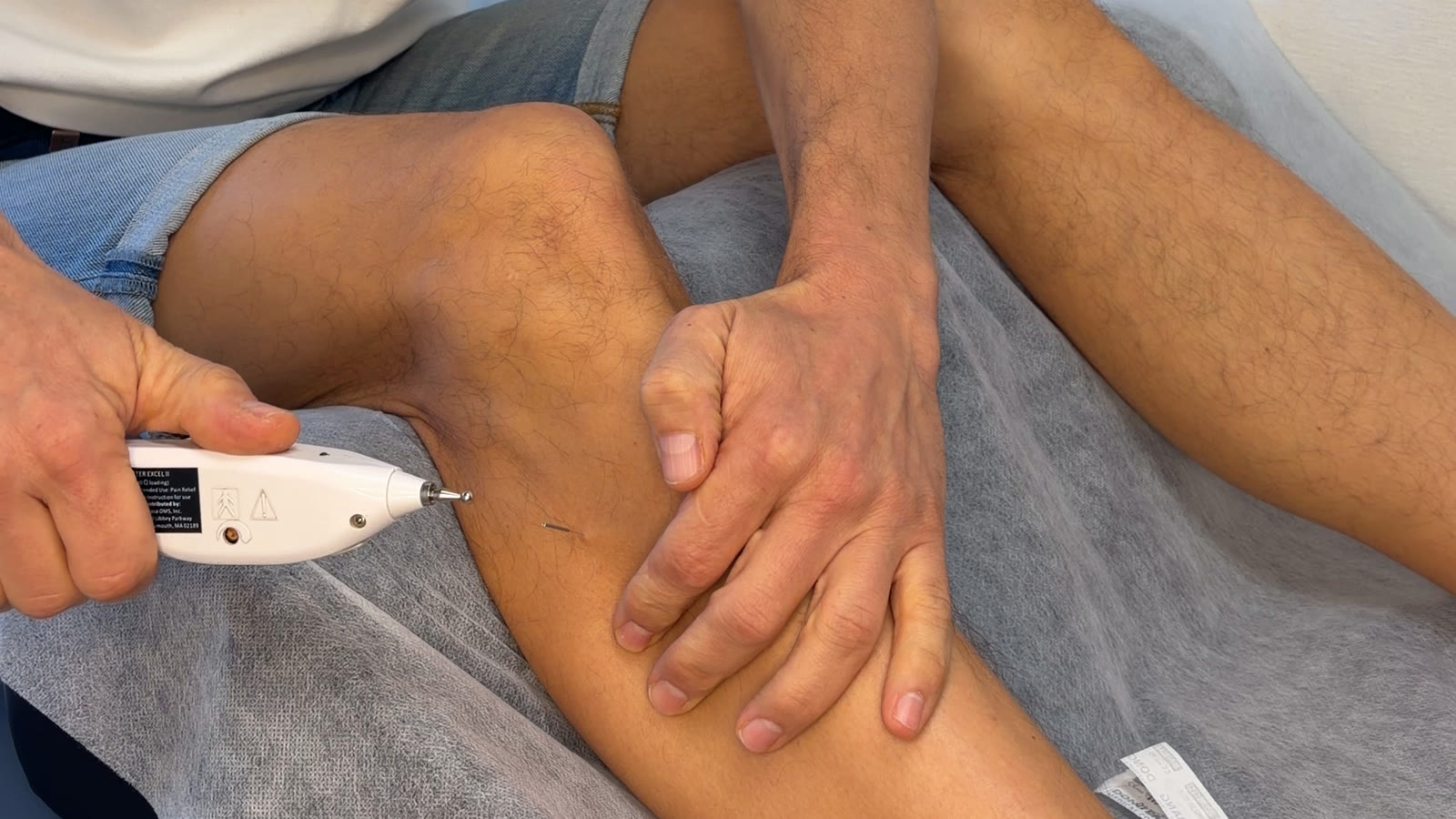
You can try massaging the area over these two muscles: the outside of your lower leg, just below the knee, and the inside of your lower leg along the shin bone. Do it gently, a few minutes a day.
If a physiotherapist gave you balance or strength exercises, keep doing them. Ice and arnica can help with the early swelling, but on their own they don't change how these muscles work.
How I treat it
The technique I use is called motor point release. A motor point is the place where the nerve enters the muscle. By stimulating it directly, we wake the muscle up. In the video you can see my foot move to the side when I stimulate peroneus longus, and move inwards when I stimulate tibialis posterior. When these muscles work properly again, every time you step down they fire, they contract and they take the weight off the joint. Sometimes I add mild electrical stimulation, which I explain in my article on electro-acupuncture.
You'll notice that I don't put needles where the pain is. The injured spot is often swollen, so we work indirectly: on the muscles of the lower leg, and on other points that increase blood flow to the ankle.
I also don't look only at the ankle. If you've been limping for a couple of months, there's a good chance your hip and knee muscles have started to compensate. If we don't work on those together with the muscles down at the ankle, you'll always have a weak spot. I don't want you to have that. I want you to be able to run again, if that's something you want to do. The same idea comes up with tendon problems, which I wrote about in healing tendonitis.
Research on acupuncture for ankle sprains is still limited, and every body responds differently, so I can't promise a result. What I can do is check whether these muscles are working and tell you honestly what I find.
When to see a doctor first
If you couldn't put weight on the foot right after the injury, if the bone itself is tender to touch, if the foot is numb or the ankle looks out of shape, see a doctor or go to urgent care for an X-ray first. A fracture needs medical care before anything else.
What happens when you come in
Before any treatment, we sit down. I want to understand how and when you injured the ankle, how long it's been a problem and what you want to get back to. Then I examine the ankle, the lower leg, the knee and the hip, to make sure everything is working properly. That's where treatment starts. If you're not sure whether acupuncture fits your kind of pain, I explain how I decide in is acupuncture right for my pain? And if your ankles and knees ache after long walks, my article on hiking and joint pain has practical tips for the trail.
Your first visit includes an examination with me ($110) and your first acupuncture treatment ($120). At the end I'll explain what I think is going on, what a plan would look like and what it costs, before you commit to anything. All the details are on our ankle sprain treatment in Mississauga page.
Aculosophy Acupuncture Clinic is at Unit 229, 1550 Enterprise Road, Mississauga, near Hwy 401 and Dixie Road, with free parking. Book a first visit or call 647-342-2281. And if you have a question about your ankle, leave me a comment under the video on YouTube. I read them and I answer as many as I can.
Common questions about an ankle sprain that still hurts
Why does my ankle still hurt months after a sprain?
Often two muscles that stabilise the ankle, peroneus longus and tibialis posterior, stop contracting on time after the injury. They no longer absorb your weight, so the injured joint takes the load with every step. The body also tightens the area to protect it, which reduces blood flow to the ligaments.
How long should a sprained ankle take to heal?
Most ankle sprains heal in about two to four weeks. If yours still hurts after a month or two, have it checked.
Can I treat it at home?
You can gently massage the outside of the lower leg below the knee and the inside of the lower leg along the shin, where these two muscles are. Keep doing any balance and strength exercises your physiotherapist gave you.
Do you put needles in the sprained ankle?
No. The injured spot is often swollen, so we work on the motor points of the lower-leg muscles and on points away from the injury that help blood flow to the area.
This page is general information, not medical advice. Acupuncture works alongside the care you get from your family doctor. If your symptoms are new, severe or getting worse, see your doctor first.